
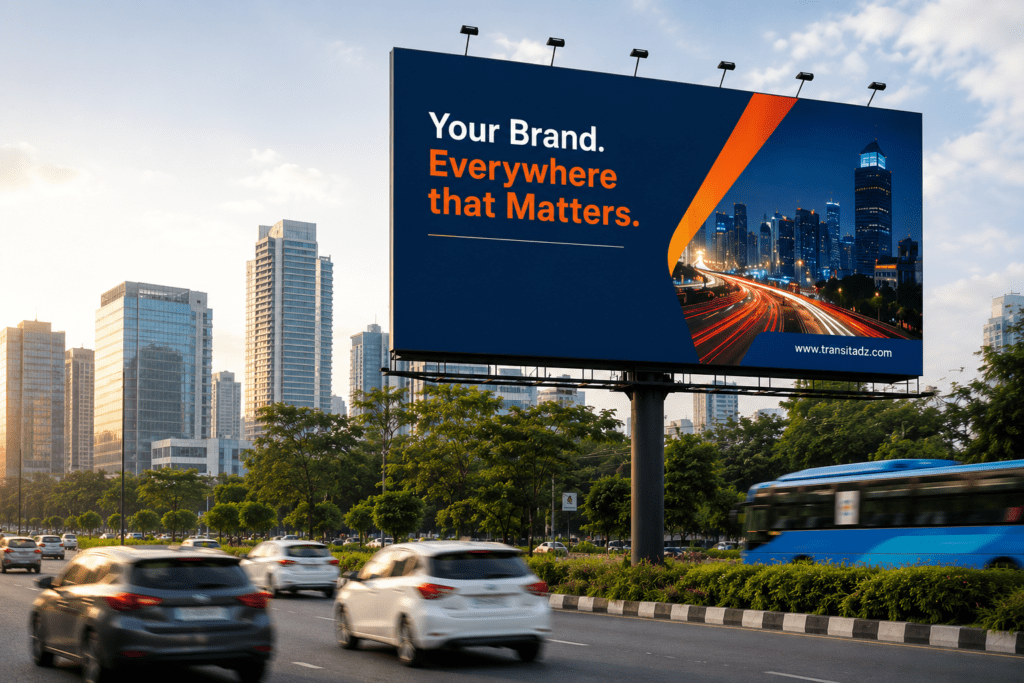
Scroll through any marketing conversation today and you’ll hear the same refrain: digital is king. Social media ads, search campaigns, influencer partnerships — brands pour billions into screens every year. Yet amid all this digital noise, one of the oldest forms of marketing is quietly having a moment. Outdoor advertising hasn’t just survived the digital takeover; it’s thriving alongside it, and smart marketers are taking notice.
The Ad-Blocker Problem Doesn’t Apply Outdoors
One of the biggest challenges facing digital marketers is avoidance. People install ad blockers, skip pre-roll videos, and scroll past sponsored posts without a second glance. There’s no “skip ad” button on a billboard or a bus wrap. When you’re driving down a highway or walking through a busy intersection, that message is simply there — unavoidable, unskippable, and impossible to mute. This built-in visibility is a huge reason brands continue investing in transit advertising and out-of-home placements even as digital budgets grow.
It Builds Trust in a Way Screens Struggle To
There’s a psychological trust factor tied to physical advertising that digital ads often lack. A massive billboard or a branded bus isn’t something a small, fly-by-night company can easily fake. Seeing a brand’s message in the real world — on the side of a building, on public transit, at a bus stop — signals legitimacy and scale. Consumers subconsciously associate this kind of visible investment with credibility, which is something no amount of retargeting ads can replicate.
Reach Without the Fatigue
Digital advertising, for all its targeting precision, suffers from fatigue. The same person might see a retargeted ad a dozen times a day until it becomes irritating rather than persuasive. Outdoor placements work differently. They reach broad audiences repeatedly over the course of daily routines — the same commute, the same walk to work, the same bus ride — without feeling like an intrusion. This is especially true for transit advertising formats like bus wraps and shelter ads, which reach commuters day after day in a way that builds familiarity rather than annoyance.
The Perfect Complement to Digital Campaigns
Rather than competing with digital marketing, outdoor advertising complements it. Studies consistently show that consumers who encounter a brand offline are more likely to search for it online afterward, creating a feedback loop between physical visibility and digital engagement. A well-placed OOH Branding can drive branded search traffic, boost social media mentions, and reinforce messaging seen across other channels — making the overall marketing mix stronger than any single channel alone.
Cost-Effective at Scale
Compared to the ever-rising cost-per-click rates on platforms like Google and Meta, outdoor advertising often delivers a lower cost per thousand impressions, especially in high-traffic urban areas. For businesses looking to build brand awareness across a city or region, formats like bus advertising and transit shelters offer sustained visibility at a fraction of the cost of comparable digital reach.
Real-World Presence in a Virtual World
Perhaps the most compelling reason outdoor advertising endures is simple: people still live in the physical world. They commute, they walk, they wait at bus stops, they drive to work. Every one of these moments is an opportunity for a brand to make an impression that a phone screen can’t replicate.
In a marketing landscape obsessed with clicks and impressions, outdoor advertising offers something increasingly rare — genuine, unavoidable, real-world presence. For brands looking to combine broad reach with lasting impact, platforms like Transit advertising make it easier than ever to tap into this timeless channel and integrate it seamlessly with modern marketing strategies.
