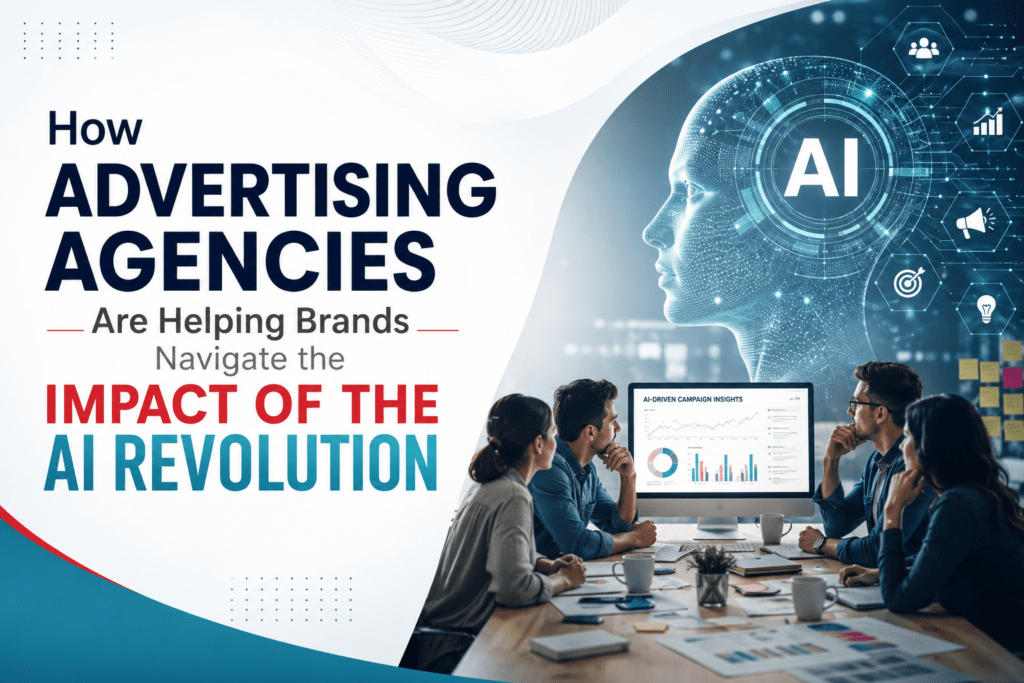
A few years ago, most marketing teams treated AI like a side experiment. Someone in the department would play around with a chatbot for drafting emails, maybe test an image generator for a mood board, and that was about it. Nobody was betting the quarter on it. That’s changed fast. AI now touches media buying, copywriting, audience targeting, reporting — basically every stage of a campaign — and a lot of brands got caught flat-footed by how quickly it happened.
This is where advertising agencies have quietly become something more than vendors. They’ve turned into interpreters, sorting out which AI tools are actually worth a brand’s time and which ones are just noise dressed up in a good demo.
Brands Don’t Have the Bandwidth to Figure This Out Alone
Ask any marketing director how they feel about AI right now and you’ll probably get a mix of excitement and exhaustion. They’re expected to adopt new tools, keep the brand voice consistent, hit the same targets as last quarter, and somehow do all of it with a team that hasn’t grown. Most in-house teams simply don’t have the hours to test every new platform that shows up in their inbox.
Agencies are in a different position. Because they’re working across multiple clients and industries at once, they see patterns faster. They know which AI-driven targeting actually moved the needle for a retail client last month, or which “AI creative” tool produced ads nobody clicked on. That kind of pattern recognition is hard to build from inside a single company.
Turning AI From a Buzzword Into an Actual Process
A lot of the real work here isn’t glamorous. It’s auditing. It’s testing. It’s agencies sitting down and asking, plainly, where automation genuinely helps and where it’s just adding complexity for its own sake.
In practice, that tends to look like:
- Running AI-generated ad copy against human-written copy in small tests before committing budget to either
- Using predictive models to sharpen audience targeting so spend isn’t wasted on people who were never going to convert
- Building reporting setups where AI surfaces the patterns, but a strategist still decides what those patterns mean for the brand
- Slowly automating the repetitive parts of production so creative teams spend more time on ideas and less on busywork
None of this is about handing decisions over to a machine. It’s closer to using AI as a research assistant that happens to work very fast, while a human still signs off on anything that goes public.
The Creative Risk Nobody Talks About Enough
Here’s a concern that comes up in almost every client conversation about AI: will this make our ads feel generic? It’s a fair worry. Feed the same prompts into the same tools often enough and you start seeing the same headlines, the same stock-photo-adjacent visuals, across totally different brands.
Good agencies push back on that tendency on purpose. AI might draft the first pass of a script or generate a dozen visual directions in an afternoon, but the actual creative decisions — the tone, the joke that lands, the visual that makes someone stop scrolling — still come from people who understand the brand.
This matters even more in out-of-home and transit advertising, where an ad has maybe two or three seconds to register with someone. A commuter isn’t going to study a subway poster the way they might a webpage. AI can help test which headline or image is statistically more likely to grab attention in that tiny window, but it still takes a human eye to know why a particular image feels warm instead of just loud.
Catching Mistakes Before They Become Expensive
There’s also a quieter, less exciting role agencies play: keeping brands out of trouble. AI tools can produce content that’s subtly off-brand, factually wrong, or biased in ways that aren’t obvious until a customer points it out publicly. Agencies with real AI experience build review steps into the workflow specifically to catch this before it goes live.
This kind of oversight isn’t optional anymore. As AI-generated content gets harder to tell apart from human work, the brands that skip the review step are the ones more likely to end up explaining an awkward ad on social media.
Smarter Media Buying, Not Just Smarter Copy
The creative side gets most of the attention, but AI has changed media buying just as much, if not more. Programmatic buying and real-time bid optimization run on machine learning now, largely invisible to the client. Agencies that specialize in this side of the business use it to stretch a media budget further, making sure ad placements — whether that’s a digital banner, a billboard, or a transit ad — land in front of people actually likely to respond, instead of a broad audience that mostly ignores it.
Teaching Brands to Fish, Not Just Handing Them Fish
One shift worth noting: some agencies aren’t just running campaigns anymore, they’re training the client’s own team. Workshops, internal playbooks, sitting in on a brand’s planning meetings to explain what a given AI tool can and can’t do reliably. It’s a slower kind of value, but it builds trust that outlasts any single campaign.
Where This Is Heading
Nobody’s pretending the AI shift is done or slowing down. But the agencies earning trust right now aren’t the ones chasing every shiny new tool that launches on a Tuesday. They’re the ones being selective — using AI where it clearly improves targeting, testing, or efficiency, and holding the line on human judgment everywhere else.
For a brand trying to figure out where to even start, working with an agency that already understands both sides of that equation is, honestly, the fastest way to stop guessing.
