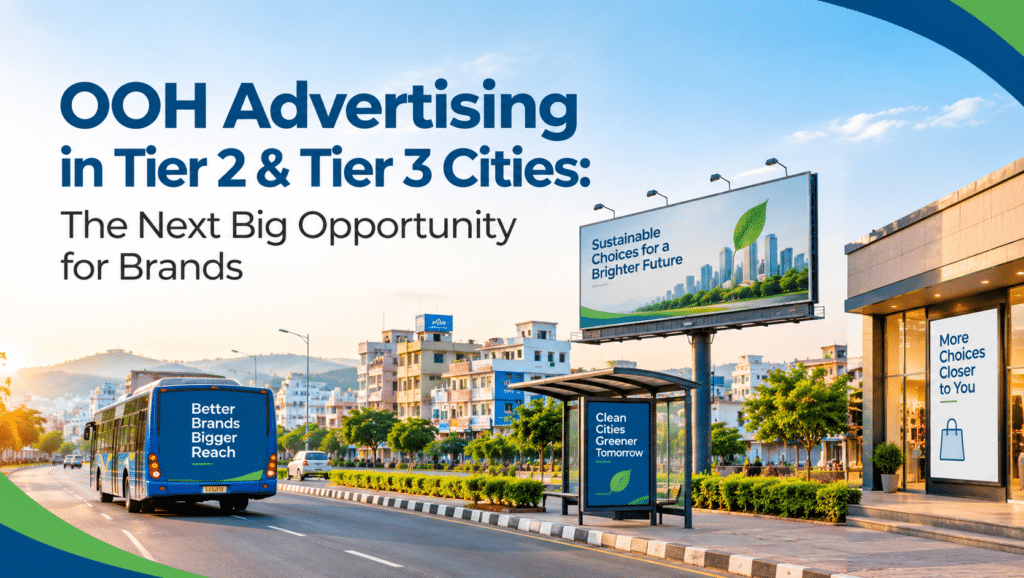
India’s advertising landscape is expanding beyond metropolitan cities. As brands look to reach new audiences, OOH advertising in Tier 2 and Tier 3 cities is emerging as an important opportunity to build visibility, strengthen brand recognition, and connect with consumers in growing regional markets.
With expanding infrastructure, increasing commercial activity, and the development of new retail and transit corridors, smaller cities are becoming increasingly relevant to brands looking to expand their reach across India.
For businesses planning regional expansion, outdoor advertising offers a practical way to establish a strong physical presence in markets beyond metros.
Why Are Tier 2 and Tier 3 Cities Becoming Important for OOH Advertising?
For years, major metropolitan cities dominated outdoor advertising investments. However, the focus is gradually expanding as brands explore new markets and seek opportunities beyond saturated urban locations.
Industry coverage in 2026 highlights growing interest in regional OOH markets, supported by infrastructure development, rising brand activity, and the gradual expansion of digital outdoor media.
Several factors are contributing to this shift:
- Expanding urban infrastructure: New roads, highways, commercial zones, and transport corridors are creating additional advertising opportunities.
- Growing consumer markets: Businesses are exploring emerging cities to reach new customer segments.
- Regional brand visibility: Outdoor media helps brands establish familiarity and recognition in local markets.
- Market expansion: Brands can use city-specific campaigns to support new store openings, product launches, and distribution growth.
- Digital outdoor innovation: Digital Out-of-Home (DOOH) is opening new possibilities for flexible and context-driven campaigns.
These developments make regional markets an important consideration in modern outdoor advertising strategies.
Key Benefits of Outdoor Advertising in Tier 2 and Tier 3 Cities
OOH advertising trends now emphasize seamless integration with mobile technology. QR codes, NFC technology, and location-based notifications create bridges between physical displays and digital experiences. This convergence enables brands to track engagement and measure campaign effectiveness—transforming out-of-home advertising from an intuition-based medium to a data-driven discipline.
1. Build Strong Local Brand Awareness
Outdoor advertising places brands in the physical spaces where people travel, shop, work, and gather.
Hoardings, billboards, bus shelters, transit advertising, and retail branding can help businesses build repeated visibility among local audiences.
For brands entering a new market, this visibility can support brand recognition and complement digital marketing activities.
2. Explore Cost-Efficient Regional Campaigns
Advertising costs vary by city, location, format, visibility, duration, and inventory availability. In selected Tier 2 and Tier 3 markets, brands may find opportunities to plan campaigns within more flexible budgets than comparable premium metro placements.
The key is to evaluate each location based on audience relevance, traffic patterns, campaign objectives, and expected exposure rather than choosing media solely on price.
3. Reach Audiences Beyond Digital Platforms
Digital advertising plays an important role in customer acquisition, but physical advertising can strengthen brand presence in everyday environments.
A well-planned OOH campaign can complement search, social media, influencer marketing, and other digital channels, creating a more consistent brand experience across online and offline touchpoints.
4. Support New Market Entry
When launching products, opening retail outlets, expanding dealer networks, or entering a new city, brands need visibility in relevant local areas.
Outdoor advertising can help communicate the brand’s presence through strategically selected locations near commercial hubs, shopping districts, transport routes, and neighbourhood markets.
Top OOH Advertising Formats for Tier 2 and Tier 3 Cities
Choosing the right format is essential to campaign performance. Brands should consider their target audience, campaign duration, local infrastructure, and marketing objective before finalising media placements.
Hoardings and Billboards
<escape>Large-format outdoor advertising is suitable for prominent roads, commercial areas, junctions, and key city entry points. It can help brands maintain a visible presence in high-traffic locations.</escape>
Transit Advertising
Transit media provides opportunities to connect with audiences during their daily journeys. Depending on local availability, formats may include bus branding, auto-rickshaw advertising, and other vehicle-based campaigns.
For brands seeking wider local visibility, transit advertising can extend campaign exposure across multiple neighbourhoods and routes.
Bus Shelter Advertising
Bus shelters and street furniture offer opportunities to reach commuters in frequently visited public spaces. These placements can be useful for campaigns targeting local communities and regular travellers.
Retail Branding
Retail branding helps brands create visibility at points of purchase and within shopping environments. Storefront branding, in-store displays, promotional installations, and entrance branding can support retail campaigns and product awareness.
Digital Out-of-Home Advertising
DOOH uses digital screens to display advertising content in selected public and commercial locations. Where suitable infrastructure exists, it can support creative rotation, time-specific messaging, and more flexible campaign management.
The availability of DOOH inventory varies significantly across cities, so local media assessment is essential.
How Brands Can Plan a Successful OOH Campaign in Emerging Cities
Entering a new market requires more than selecting an available billboard. A structured approach can help brands make better media decisions.
Step 1: Identify the Right Cities
Shortlist cities based on your target audience, distribution network, business objectives, retail footprint, and growth priorities.
Cities such as Jaipur, Lucknow, Indore, Surat, Nagpur, Coimbatore, and Bhubaneswar may be worth evaluating, depending on your industry and target customer profile.
Step 2: Understand Local Audience Movement
Study key commercial areas, commuting routes, shopping zones, transport hubs, and high-activity neighbourhoods. The best location is one that aligns with your intended audience and campaign objective.
Step 3: Select Suitable Advertising Formats
Choose a combination of hoardings, transit media, bus shelters, retail branding, and digital screens according to local availability and budget.
An integrated media mix can help maintain consistent messaging across different audience touchpoints.
Step 4: Adapt Creative to Local Markets
Use clear messaging, strong visuals, and culturally relevant communication. Regional-language creatives may improve familiarity and relevance where appropriate.
Keep the primary message easy to understand at a glance, especially for audiences viewing advertisements while travelling.
Step 5: Measure Campaign Performance
Define campaign objectives before launch and agree on reporting requirements with your advertising partner.
Useful measures may include the number of active media sites, campaign duration, installation photographs, location verification, estimated audience exposure where available, brand-search trends, QR-code visits, and enquiries.
Combining physical media reporting with digital campaign data can provide a more complete view of campaign performance.
Industries That Can Benefit from Regional OOH Advertising
OOH advertising across Tier 2 and Tier 3 markets can support a range of business categories, including:
- FMCG brands: Increase product visibility and support regional distribution.
- Automobile companies: Promote dealerships, new launches, and service centres.
- Retail brands: Support store openings, festive promotions, and local offers.
- Education institutions: Promote admissions, courses, and campus awareness.
- Real estate companies: Build project visibility in relevant catchment areas.
- Banking and financial services: Improve local awareness of branches and services.
- E-commerce and D2C brands: Support regional campaigns and omnichannel marketing.
- Telecom and technology brands: Communicate product launches, plans, and service availability.
The most effective media strategy will depend on the brand’s target audience, local presence, and business goals.
The Future of OOH Advertising in Tier 2 and Tier 3 India
The next phase of outdoor advertising will depend on how effectively brands combine location planning, creative execution, digital integration, and campaign measurement.
Three developments are particularly important:
Digital integration: Connecting outdoor campaigns with search, social media, QR codes, and other digital touchpoints can help brands extend campaign engagement beyond physical locations.
Localised communication: Region-specific messaging and creative adaptation can make campaigns more relevant to local audiences.
Better campaign accountability: Documented site verification, installation evidence, consistent reporting, and measurable campaign objectives can improve transparency and help marketers evaluate outcomes.
Although major metros remain important advertising markets, emerging cities offer brands additional opportunities to build regional presence and support long-term expansion.
Conclusion
OOH advertising in Tier 2 and Tier 3 cities is becoming an important consideration for brands looking to expand beyond metropolitan markets. With the right city selection, strategic media placements, locally relevant creatives, and reliable campaign execution, outdoor advertising can support brand awareness and regional growth.
For brands planning their next expansion, the opportunity lies in choosing the right locations and creating campaigns that connect with people in their everyday environments.
Looking to expand your brand’s reach across India?
Transit Advertising helps businesses explore outdoor advertising, transit media, retail branding, and integrated campaign opportunities tailored to their marketing objectives.
Connect with Transit Advertising to discuss your next OOH campaign.
